

📑 Table of Contents
- Loading headings…
Two friends in Coimbatore started businesses in the same year. One sells handmade candles to shoppers. Every sale is a small battle: convince one person, earn ₹300, repeat tomorrow. The other files GST returns for 40 small shops. Each shop pays her ₹2,500 every month, whether the month is good or bad, because the filing cannot wait.
Same city. Same effort. Completely different lives. The difference is who pays them.
That is the whole idea behind B2B, which simply means “business to business”: your customer is a company, not a person shopping for themselves. And companies, when you remove a headache that costs them money or time, pay reliably, repeatedly, and without needing to fall in love with your brand first.
Here are twelve B2B service ideas that companies genuinely pay for, explained plainly, with who buys them and how to start small.
Why selling to businesses is kinder to beginners
When you sell to regular people, you need thousands of customers before the money matters. When you sell to businesses, one client can cover your month’s expenses. Five clients can be a salary. Fifty can be a company.
Businesses also decide differently. A shopper buys on mood. A business buys on maths: does this save us money, time, or trouble? If your answer is yes and you can show it, you do not need clever advertising. You need a clear offer and a fair price.
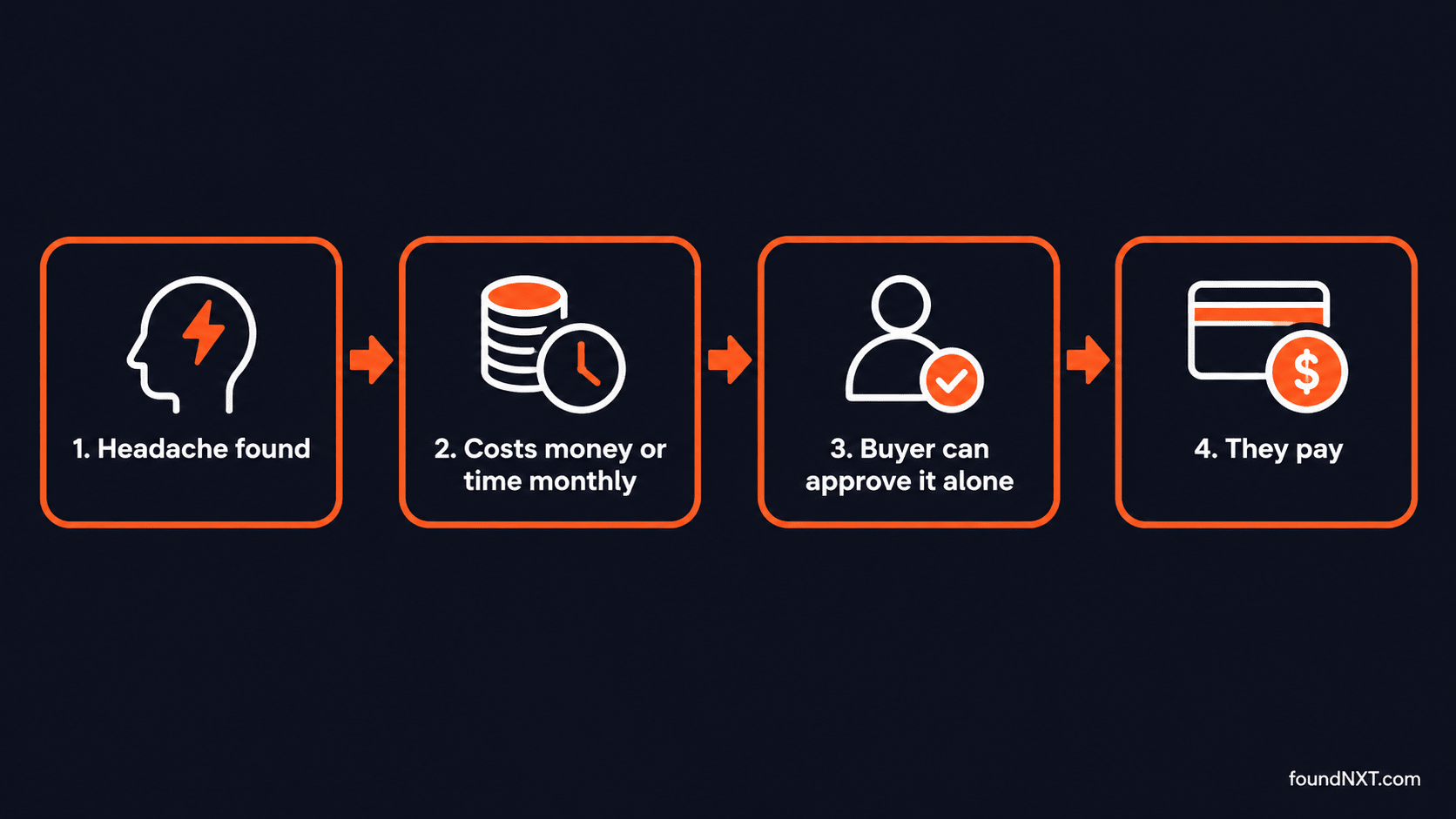
The two-question test. Before trying any idea on this list, ask: (1) Does this remove a headache that costs the business money or time every single month? (2) Can the person who feels the pain approve the spend without calling a board meeting? Two yeses means a company will pay.
1. GST and bookkeeping support for small businesses
Every GST-registered business in India must file returns regularly, and a mistake is expensive: penalties, notices, and blocked input tax credit (that is the tax a business already paid on its purchases, which it gets back only when filings are clean). Owners know this, and it worries them.
That worry is your business. Small shops and traders happily pay ₹2,000 to ₹5,000 a month to someone who keeps their books tidy and filings on time. Learn the basics of Tally or Zoho Books, start with one distributor or clinic you know, and let referrals do the rest. The GST portal tells you exactly what must be filed and when.
2. Recruitment for one narrow niche
Companies struggle to hire, and they pay real money for help. A common recruiter fee in India is around 8% of the new hire’s first-year salary. Place one person at ₹6 lakh a year and you earn roughly ₹50,000 from that single phone-call-heavy transaction.
The trick is to narrow down. “I find sales staff for logistics companies” beats “I am a recruitment consultant” every time, because the logistics owner instantly knows you understand his problem. Pick the industry you know best and start there.
3. Website care plans
Every business website slowly breaks. Pages get slow, forms stop sending enquiries, plugins go out of date, and one day the site is down and nobody notices for a week. Most small companies have nobody whose job this is.
Sell a monthly care plan: updates, backups, small fixes, and a human to call when something looks wrong. ₹3,000 to ₹10,000 a month per site is normal, and once a client trusts you with their website, they rarely leave. It is the digital version of the building’s maintenance man, and every building needs one.
4. Catalogue management for online sellers
Sellers on Amazon, Flipkart, and now ONDC live or die by their product listings: titles, photos, specifications, search keywords. A messy catalogue means a product nobody finds. Most sellers are busy packing boxes, not polishing listings.
Offer to clean up and maintain their catalogue, charging per product or a monthly fee. Start with one local manufacturer who makes good products but lists them badly. You can usually show a before-and-after in a single afternoon, which makes this one of the easiest services to demonstrate.
5. Founder ghostwriting and content
Business owners know they should post on LinkedIn, publish blogs, and send a newsletter, because visibility brings customers. But writing takes hours they do not have, and hiring a full-time writer is expensive.
So they pay someone to interview them for 30 minutes a week and turn that into posts and articles in their own voice. Retainers commonly run ₹20,000 to ₹60,000 a month per client, depending on volume. If you can write clearly and ask good questions, three or four clients is a full income. Our guide on where your first 100 customers actually come from applies here almost word for word.
6. Licence and compliance paperwork
A restaurant needs an FSSAI licence. A factory needs pollution board consent. Every shop needs a Shops and Establishment registration. Each of these lives on a different portal with different forms, and missing a renewal can shut a business down.
Owners will pay someone who simply knows which form, which portal, which deadline. You are selling peace of mind, and peace of mind is a subscription: every licence expires, every year, forever. Keep a calendar of your clients’ renewals and you will never run out of work.
7. Corporate training on practical skills
Companies pay trainers to teach their teams Excel, email writing, customer handling, and increasingly, how to use AI tools without leaking company data into them. A one-day workshop for a 20-person team can fetch ₹25,000 to ₹75,000 depending on your reputation and their budget.
You do not need to be a celebrity trainer. You need one skill you are genuinely good at, packaged into a half-day session with exercises. Your first client is often a former employer, because they already trust your work.
8. Part-time finance help for small companies
A full-time Chief Financial Officer costs more than most small companies can pay. But a 30-person company still needs someone to watch cash flow, chase unpaid invoices, and tell the owner “you can afford this” or “you cannot, not yet.”
The answer is a fractional CFO: an experienced finance person who serves four or five companies part-time. Each pays ₹15,000 to ₹50,000 a month for a few days of attention. If you have a finance background, this is one of the highest-paid services on this list, because the headache it removes (running out of cash) is the one that kills companies.
9. Customer support for online brands
Every direct-to-consumer brand drowns in the same messages: “Where is my order?”, “I want to return this”, “The size is wrong.” Founders start by answering these themselves, then spend half their day in the inbox.
A small support team of two or three trained people, answering under the brand’s name and rules, solves this. Brands pay per person per month, and the work is steady because orders never stop. Start with one growing brand in your city; they are easy to find because they advertise everywhere.
10. Lead research and appointment setting
B2B companies need meetings with the right people, and finding those people is slow, boring work: building lists, checking who actually decides, writing first messages, following up. Sales teams hate doing it. They would rather talk to a warm lead.
So they pay for warm leads. Charge per qualified meeting booked, or a monthly retainer for a fixed number. This service needs no degree and no office, only discipline, a spreadsheet, and thick skin. It is also the fastest way to learn how selling really works, which is a skill worth more than the fee.
11. Product photography and short video
Every business that sells anything now needs photos and video: for listings, ads, menus, catalogues, and social media. A jewellery store, a cloud kitchen, a furniture maker, all of them need fresh visuals every month, and a phone in the owner’s hand is not cutting it anymore.
A half-day shoot, edited and delivered, is an easy thing for a business to approve because they can see exactly what they are buying. Offer a monthly shoot day as a subscription and your income stops depending on luck.
12. Software setup and automation
Small companies buy software and then never set it up properly. The billing app is not connected to anything, customer details live in five places, and someone copies numbers by hand every evening. They know it is wasteful. They just do not know how to fix it.
If you are the person friends call when technology misbehaves, this is your idea. Charge a one-time setup fee to connect a company’s tools and automate the boring parts, plus a small monthly fee to keep it running. You are not selling software. You are selling the evening back to the person who was copying numbers.
How to choose your one idea from twelve
Start from what you already know. If you worked in a hospital, recruitment for hospitals is your niche. If you grew up around your uncle’s transport business, you already speak the language of fleet owners. The beginner’s advantage in B2B is not talent. It is familiarity.
Then narrow down until it almost feels too narrow. “Accountant for restaurants” beats “accountant” because the restaurant owner hears it and thinks: finally, someone who gets my world. You can always widen later. You cannot un-confuse a first impression.
Finally, productize. Instead of “I do digital marketing”, offer “12 posts a month, 2 ad campaigns, a monthly report, ₹30,000.” A fixed scope with a fixed price is easy to say yes to. A vague offer forces the buyer to do the thinking, and busy people postpone anything that makes them think.
Pricing without the panic
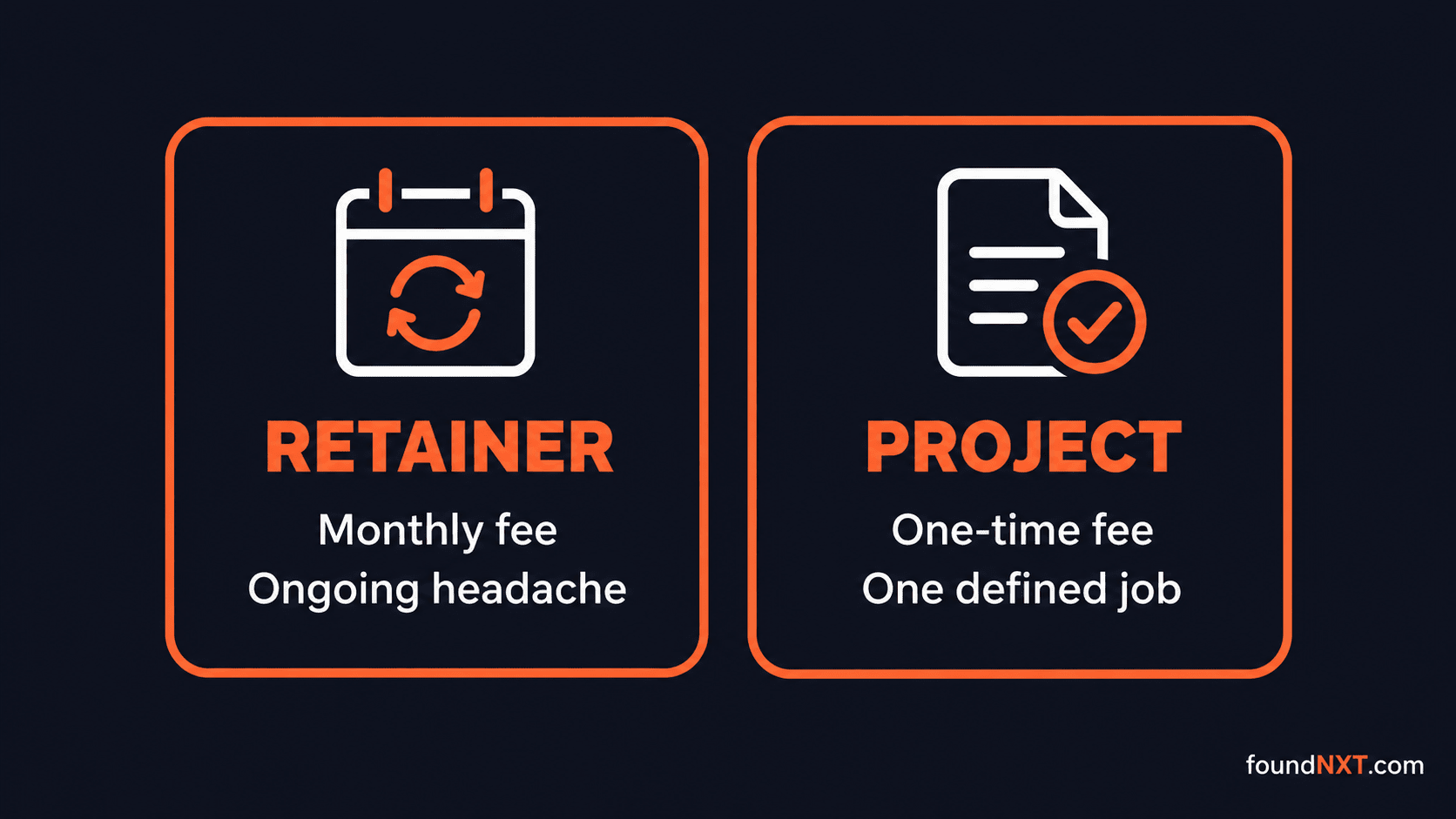
There are only two models you need. A retainer is a monthly fee for an ongoing headache, like bookkeeping or website care. A project fee is one payment for a defined job, like a catalogue clean-up or a training day. Retainers build a stable business; projects build cash and case studies. Use both.
Charge for the headache, not the hour. If your work saves a business ₹1 lakh a year in penalties or recovers ten hours of the owner’s week, your fee is a bargain at far more than “₹500 times the hours.” Price the relief, not the effort.
Start slightly under market rate to make the first yes easy, deliver embarrassingly well, and raise prices after your third client. And if you are wondering where those first three clients come from: your past employer, businesses near you that you already use, and one question asked at the end of every job, which is “who else do you know with this problem?” We wrote a full playbook on testing your idea for ₹0 before you spend anything serious.
Key takeaways
- B2B means selling to companies. One client can cover a month; you do not need thousands of customers.
- Companies pay for headaches removed: anything that costs them money, time, or sleep every month.
- The best ideas pass two tests: a recurring pain, and a buyer who can approve the spend alone.
- Narrow beats broad. “Recruiter for logistics companies” wins against “recruitment consultant.”
- Price the relief you deliver, not the hours you spend. Use retainers for ongoing work and project fees for one-time jobs.
The thought to leave with
Every business around you is quietly tolerating some headache right now: a filing they dread, a listing they never fixed, an inbox they are drowning in. Your first B2B service is probably one of those headaches, solved well, for a fair monthly fee.
So here is the question worth sitting with: which headache in your industry would people happily pay to never think about again? That answer might be your business. If you enjoy ideas like this every week, the Weekly Founder Brief newsletter and our list of business ideas born from everyday problems are good next stops.